Will Texas homeowners insurance pay to remove a tree?
Sometimes. What the tree hit matters more than the fact that it fell. And the paperwork from your tree service shapes how smoothly the claim goes.
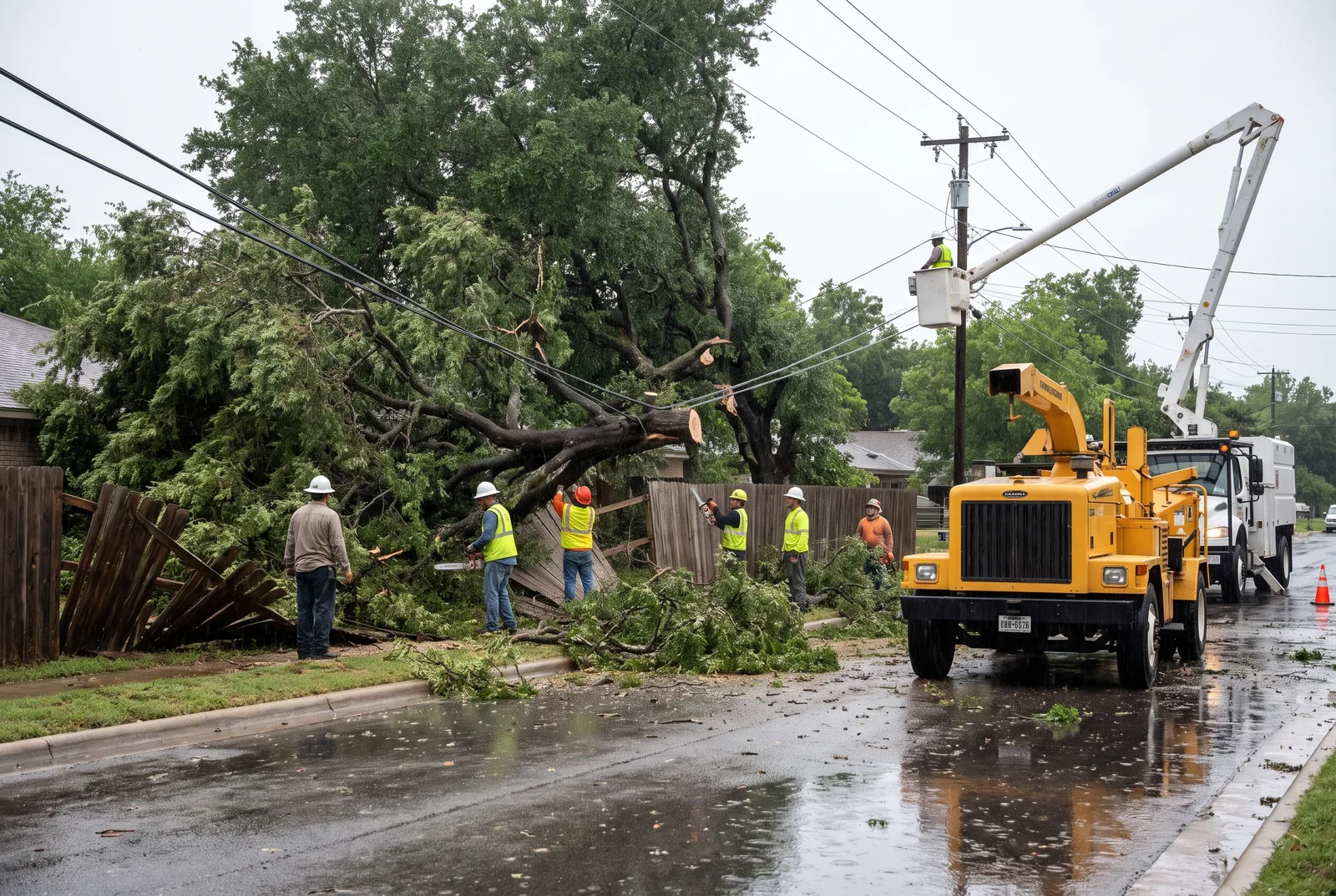
The basic rule
A standard Texas homeowners policy pays for removal when two things are both true.
- The tree, yours or a neighbor's, came down because of a covered peril: wind, hail, lightning, ice, or the weight of ice and sleet.
- It damaged a covered structure: the house, an attached patio cover, a fence, a detached garage or a shed.
Then the policy pays to fix the structure and to get the tree off it. Most also carry a separate allowance for debris removal, with a cap. That cap is commonly $500 to $1,000 per tree, and sometimes a percentage of the dwelling limit. A tree that lands in the yard without hitting anything is generally not covered, however large the cleanup.
Case by case
On the house
Covered, minus your deductible: getting the tree off the structure, fixing the roof, and debris removal up to the cap. On Texas wind and hail claims the deductible is often a percentage of dwelling coverage, 1 or 2 percent, not a flat dollar figure. Read your declarations page before you file.
Blocking the driveway
Plenty of policies pay to clear a tree that blocks a driveway or a handicap-access ramp, even if it damaged nothing else. Look at yours.
Down in the yard, nothing damaged
Usually not covered. After an ice storm, this is the case that catches people off guard.
The neighbor's tree, your roof
You claim on your own policy and pay your own deductible. Your insurer may go after the neighbor's insurer, but only if the tree was a known hazard the neighbor ignored. That's why a dead post oak next door is worth documenting in writing.
Your tree, the neighbor's roof
That goes to their policy. The exception: your tree was visibly dead or hazardous, and you had been told. A dead post oak you keep meaning to deal with is the classic case where liability moves to you.
Taking it down before it falls
Never covered. Insurance pays for sudden damage, not upkeep. Removing a split cedar elm before it drops is your cost. It's also cheaper than a deductible plus a new roof.
Paperwork to get from the tree service
- Photos of the tree lying on the structure, taken before any cutting, with the address in frame if you can.
- An itemized invoice with removal from the structure and debris cleanup on separate lines, so the adjuster applies the right line and the right cap.
- A short, dated note in writing on the hazard and the work done.
- The company's certificate of insurance. Your adjuster may ask for it. You should ask for it regardless.
Red flags
Be wary of anyone offering to "waive your deductible," bill your insurer directly, or have you sign an assignment of benefits. Texas law says you pay your deductible. Since 2019, a contractor offering to waive it has been breaking the law. A tree service works for you. It hands you the paperwork, and you run the claim. Storm chasers swept through Williamson County after the 2021 freeze, the 2022 tornado and the 2023 ice storm, and did plenty of damage of their own.
Common questions
Does filing a tree claim raise my premium?
It can. One weather claim usually weighs less than a liability claim, but it still counts, and Texas insurers have been tightening up. When the claim is close to your deductible, filing often isn't worth it. Talk to your agent first.
Is stump grinding covered?
Sometimes. The debris allowance on a tree that hit a structure may stretch to grinding its stump. Often it falls short. Ask your insurer.
A tree fell on my car. Which policy pays?
Your auto policy, under comprehensive coverage. Not the homeowners policy.
Will you bill my insurer for me?
No. Be careful with anyone who says yes. We give you the photos and the itemized invoice. You file the claim, and the insurer pays you.
What if the tree is lying on a power line?
Georgetown Utility Systems deals with the line, and usually with the tree on it, free of charge. Whatever is left on the ground is an ordinary claim.
Related: 24/7 emergency service · Storm debris cleanup · Paying for tree work · Removal prices